• Skip to main content

Sarah L. Kaufman

Author of Verb Your Enthusiasm & The Art of Grace

  • Home
  • Books
    • Verb Your Enthusiasm
    • The Art of Grace
      • About the Book
      • Excerpt
      • The Art of Grace Blog
  • Bio
  • Writing
  • Events
  • Contact

sarah kaufman

From My Great-Grandmother’s Table, the Secrets of Life

November 25, 2015 By Sarah Kaufman

dining room table blog pic
When my family sits down to Thanksgiving dinner tomorrow, we’ll gather in a rather modest dining room dominated by an immodest table. It’s a broad, sprawling Queen Anne reproduction with a deep mahogany finish. It belonged to my great-grandmother Mildred Holt, who at age 105 became Johnny Carson’s oldest guest. I write about her and Carson in my book, The Art of Grace. Like everything else about Mimi, as we called her, the table is expansive and adaptable. With five leaves in it, it nearly extends into my living room.

Normally, we keep it in a small round, no leaves, but for special occasions, where we might seat 14 or 15, we unfold it in all its scarred, somewhat rickety glory. This is how Mimi kept it in her home in Kansas.

Mimi was born in the tiny town of Ellsworth in 1882, the youngest girl of 10 children. Her father was a Civil War veteran. She lost her mother at 10; she lived through the Dust Bowl and the Depression. That’s when her banker husband lost his business. But as the very soul of self-sufficiency, Mimi put her big table and small kitchen to good use. It was around that great table–which she bought on her honeymoon in 1905–that her high spirits and natural grace came into full flower. Starting in the 1930s, when money was tight, Mimi supported her family by taking in boarders and running a tearoom in her home, serving meals to schoolteachers and workmen in her dining room.
https://www.youtube.com/watch?v=U4EI2fvi_xk
When a new highway diverted traffic away from Ellsworth, the town’s two hotels shut down. After that, the only place you could get “a meal you could be proud of,” as my mother put it, was Mimi’s tea room. Mimi had a saying: “I’ll never eat a meal alone.” By all accounts she never did. For her, hospitality was a pleasure. She really liked people, and she busied herself every day feeding them. (Her specialty was chicken, fried or scalloped; it started at the chopping block in her back yard. Mimi was unerring with an ax.)

I adored Mimi. I’ll always remember her as slightly stooped and soft, with a quick step, thick, wavy gray hair and bright eyes. She was the most cheerful person I’ve ever known, and the amazing thing is, I was fortunate to know her into my 20s. After she died, my mother discovered diaries that Mimi had kept for years and years. They were full of recipes, notes on what she’d cooked, what card games she’d played, and with whom. They weren’t terribly revealing, except for this: Mimi focused on what makes life good. Food. Companionship. Enjoyment.

She worked hard, wrote letters, entertained. And she lived to be 108–three years beyond her moment of fame with Carson, when she drank a highball on his set and kept him laughing with her chipper comebacks. I think the secret to Mimi’s long life was in those diaries, their simple, consistent emphasis on human connection. I like to think that some of Mimi’s grace–especially her upbeat outlook on life and her irrepressible warmth–lives on as we pull up to her table.

Read more about Mimi here, in an excerpt from THE ART OF GRACE.

Filed Under: Uncategorized Tagged With: johhny carson, mimi, sarah kaufman, the art of grace

Joyce Carol Oates, on the Power of Sympathy

September 22, 2015 By Sarah Kaufman

photo credit: Alvaro Remesal Royo/Flickr Photo Sharing

To prepare for upcoming book talks (check my list of events here), I’ve been going to author events around town. I have approached them soberly, as research. Then I saw Joyce Carol Oates at Politics and Prose, a beloved independent bookstore, and I found the inspiration I craved.

Oates, 77, wasn’t perfectly polished. She wasn’t excruciatingly prepared. She was simply at ease in sharing her work with us. She read from notes, and from her new memoir, “The Lost Landscape: A Writer’s Coming of Age.” And she was absolutely charming, human, funny and, yes, graceful.

The first thing she did, in fact, was not talk about herself. Instead, she complimented her audience in advance on the intelligent questions she knew we would have for her at the end of her reading, “and I can’t wait to hear them,” she said, in a kindly, almost shy voice, and you believed her. She seemed utterly sincere in intimating that the minor business of her  book was just a bit of housekeeping to get through before addressing the more fascinating topic of us.

Apparently, she’s not only graceful in front of a crowd. The young woman who introduced her noted that Oates, who has made more than a dozen appearances at the bookstore, was “always so kind to the staff.” What a lovely–and unexpected–comment to make when presenting a literary celebrity, or anyone, for that matter.

In the memoir excerpt that Oates read, she detailed her young appetite for Mad magazine and horror comic books like Tales From the Crypt, which gave my heart a little jolt: that’s my own story, I thought, recalling summer days poring over the same material. She also read about her early passion for knitting, though her funny-shaped sweaters “didn’t really have a natural ending.” She recounted a distaste for Bible camp, and drew hearty laughs when she noted that “one of the nice things about being an adult is you don’t have to go to camp.” As she spoke, she gently swirled a hand through the air, as if brushing away dust motes.

Not all of her memoir is whimsical. It contains episodes of abuse and other traumas. But in referring to these darker passages, Oates reminded us of something essential. Reading from the Afterword of her book, she concluded that without having lived the misery described on some of the previous pages, “I would feel that my life was less complete; most importantly, my life as a writer, for whom the most crucial quality of personality is sympathy.

“Indeed, to revise Henry James: ‘Three things in human life are important. The first is to have sympathy; the second is to have sympathy; and the third is to have sympathy.’”

Sympathy, indeed, is what you feel from Oates’ writing and, most especially, from her presence, which was all about humility, generosity and understanding.

I can’t wait to read her book.

photo credit: Alvaro Remesal Royo/Flickr Photo Sharing

Filed Under: Uncategorized Tagged With: joyce carol oates, sarah kaufman, sarah kaufman author, sarah kaufman grace, sarah kaufman washington post

Summer’s Littlest Musicians

August 22, 2015 By Sarah Kaufman

window pic

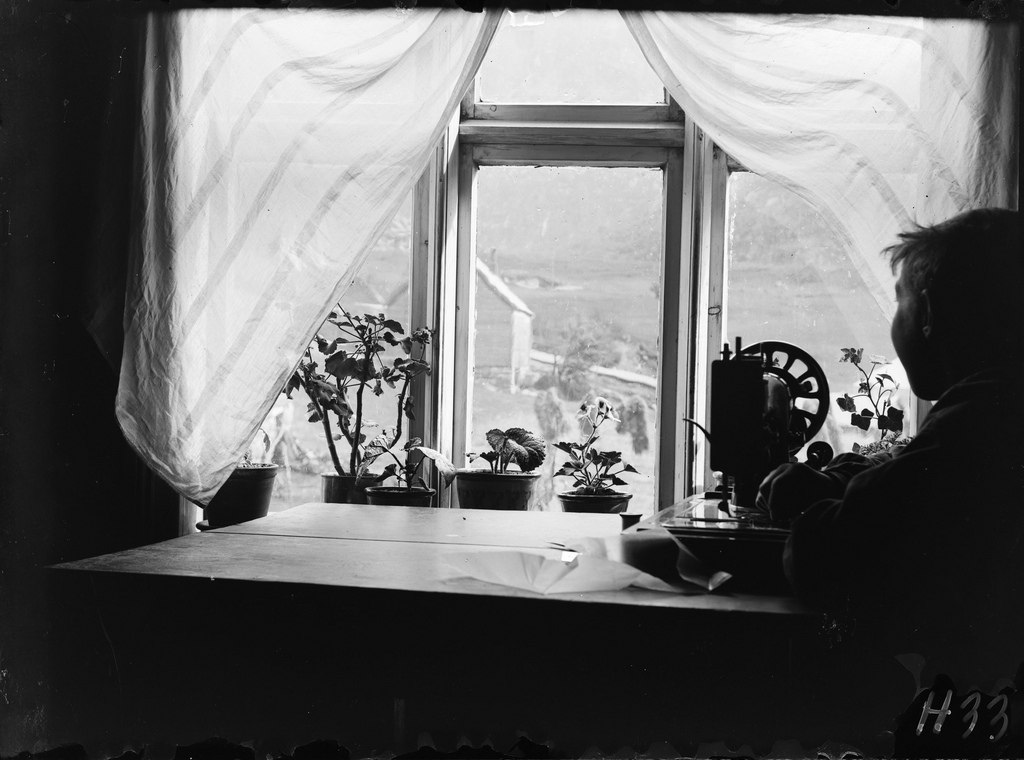
On a day like today, August is the mildest month. Yes, even here in the Washington, DC, area, where a recent rain washed away the stickiness. Morning swept in on a breeze. My windows are wide open, and fresh air and cicada music fill my house.

I love the raspy, ringing hum of these annual little musicians. I remember them singing me awake when I was a child; my bedroom windows, always open in our unairconditioned house, were surrounded by leafy tree branches full of these bright-eyed creatures. Cicadas suggest a particular sort of breeze, because to hear their song the way I do today, so clear and loud, means the windows are open to receive cool, stirring air. It heralds a sunny, slow, delicious day.

The cicadas’ song combines art and industry. They’re busily at work, calling for mates, but their sound is exhilarating and inspiring. They’re absorbed in a creative act of courtship, the first step to bringing about new life. Their lush sound means they’re in the flow. It’s the sound of thriving.

cicada pic

But why is that insect song so pleasing to us humans? It’s hardly a smooth sound. It’s rough and buzzy. If you love it as I do, perhaps it’s because of that shimmering urgency. The sound is surging rather than monotonous; it rises and falls in waves of gentle excitement, with just enough variation  to hold the interest.

Poets and mythmakers have long been fascinated by cicadas, with their lifecycle and the way they transform from earthly grubs to winged musicians. In the ancient world, cicadas were linked to resurrection, spiritual awakening and joy. Apollo revered them. So did Aristotle. (He also ate them.)

According to Greek myth, cicadas are transfigured humans. They started out as folks who became so moved by the Muses that they sang and danced themselves into bliss. They entered the flow, losing themselves in art-making, to the point where they stopped eating and died, without realizing it. They were too happy to notice.

I can’t imagine a more wonderful way to go. The Muses agreed. They rewarded their devotees with the gift of existing only to sing. In return, so the story goes, cicadas watch over humans, keeping their bright eyes especially on those who are doing their best to honor the arts and creativity.

I think of them as selfless givers, in the tradition of graceful people everywhere. Cicadas are quite distinct from locusts, the crop-destroying pest. Cicadas don’t feed on vegetation, though they do sip a little tree sap. They don’t bite or sting. They emerge from the earth simply to sing, find a lover, lay eggs and die. In the process, they congregate in choruses, making these very vocal mating calls and offering us a free outdoor concert.

Theirs is a full-body art, more of a dance than a song, actually. It’s a little like tap dancing; movement that makes music. The males produce the sound by buckling the “timbals,” a special membrane on the underside of their abdomen. They sing in the trees, not while flying but from a position of rest. They sing in sunshine. They offer a lesson in entering the flow, in existing with graceful ease and joy, in starting every day with music and hope.

[Click here to learn more about cicadas.]

Filed Under: Uncategorized Tagged With: august, cicadas, grace, sarah kaufman, sarah l. kaufman, summer

You Got One More Gear

August 10, 2015 By Sarah Kaufman

Tires_vintage_art_01

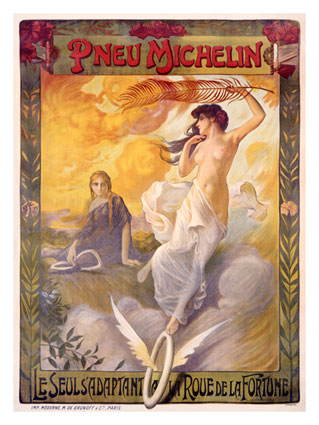
I fixed my eye on the kid up the road. He was my son, a recent high-school grad and competitive cyclist, and he was waiting for me with a big smile as I churned toward him on a mountain bike in North Carolina’s Pisgah Forest.

“Hey Mom, you got one more gear,” he said in surprise as I arrived. I looked down at my chain ring and saw he was right: I could have shifted into easier pedaling. But though the climb was steep I hadn’t felt I needed it–I’d been so focused on that smile of his, a magnet of encouragement.

We continued riding, side by side, but darn if the mountain wasn’t growing, rising up around every turn bigger and beastlier than before. Now I was absolutely in my easiest gear, but it wasn’t enough. I had to stop.

“C’mon, Mom!” my son called back to me, his grin a bright spot of light in the forest shade. “Drink some water, Mom! Get back on, Mom; you got this!”

Uh, really? I thought. But his perkiness and the sparkle in his eye moved me back onto the saddle. And when I started pedaling again I had that feeling from before, like I had one more gear–even though I didn’t. Somehow I felt I had a little reserve in the tank; I wasn’t yet running on empty. I had just enough to keep going.

Encouragement, inspiration, awe: These are all powerful forces. Curiously, they’re rarely studied by scientists and academics. They’re difficult to document with data points. But we know them when we feel them.  They ease and lubricate our efforts, they get us through hard times. Any athlete or weekend 5K-er knows that cheering from the sidelines helps fire up the will. In any setting, joyfully given support (joyful is the operative word!) can offer a lift. And along with the wave of optimism blowing your way, you might feel a little awe at yourself, too. How’d I manage to motor on? That’s a pretty nice gift.

Awe can arise from a moment of human lovingkindness just as it can from nature, beauty or a religious context. An interesting New York University study –a rare one to address this topic–shows that experiencing awe can make us happier, less stressed, even more creative. To which I’ll add: especially when you stumble upon awe in a surprising place, like when a thigh-burning test in the woods is sweetened by a bright-eyed teen.

Those with the kindness and compassion to inspire awe are truly graceful. They transform a tough time into a moment of grace. They are that one more gear, which eases our efforts and gives us elegance when we least expect it. 

Perhaps you’ve had an experience like this. Who’s your “one more gear”?

Filed Under: Uncategorized Tagged With: art of grace, awe, encouragement, grace, inspiration, pisgah, sarah kaufman, sarah l. kaufman

Leap Into Grace

August 7, 2015 By Sarah Kaufman

exercising on the beach

Here’s what I believe about grace:

Grace is part of the human condition. Let’s own it.

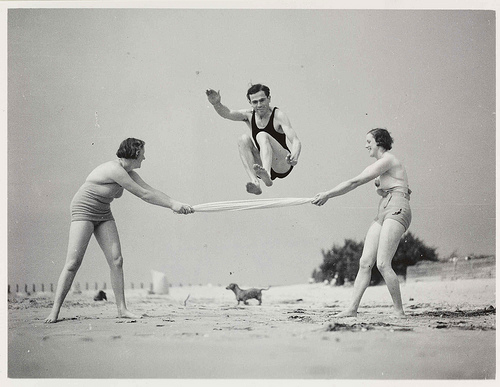
Grace, as poets and philosophers have pointed out for centuries, is part of beauty. Some feel it’s more important than beauty. “Beauty without grace is the hook without the bait,” wrote Ralph Waldo Emerson. When we think of beauty, we tend to focus on static qualities of appearance. Grace, however, is beauty in action, whether we’re talking about grace as a spiritual quality, as welcoming behavior, or as a smooth and harmonious way of moving.

Graceful movement is perhaps the most underrated of the three types of grace; religious grace or “the social graces” may spring to mind first. But think about movement for a moment. How does it happen? There is so much mystery to movement, which is part of its enchantment. No one really understands how we move, how we manage to get all our parts organized to brush our teeth or take out the trash or play tennis without thinking much about each moment. The mechanisms by which our brains orchestrate movement and get our bodies out into the world–which is at the very core of our evolutionary mandate–remain obscure. They’re simply too complicated to study with the available brain-scanning technology. Talk to neuroscientists and you’ll hear how awestruck they are by the secret choreography of our 100 billion brain cells, all working together to produce coordinated motion.

Here’s one of my favorite TED talks, by neuroscientist Daniel Wolpert, a self-described “movement chauvinist.” He’s funny and wise, and addresses this very subject. His talk is called “The Real Reason for Brains.”

Robots can beat us at chess but they cannot approach the ease of ordinary human motion. Breaking down the miracle of movement is beyond the reach of science, but there is not much mystery to how we can become even better, more graceful movers. It’s pretty simple: Practice. “Grace is the growth of habit,” wrote eighteenth-century French moralist Joseph Joubert. “This charming quality requires practice if it is to become lasting.”

Grace is an habitual practice, which involves and enhances the whole person. Getting up and moving is the only way we’ll move better, and more gracefully. Personally, I think it’s more appealing to view moving as a route to being graceful, rather than as a chore to labor through in order to burn calories or get fit.

It’s important to find a physical activity you truly love. For me, it’s swimming; I’m in the pool every weekday morning. And every morning it feels like a miracle. I never learned to swim as a kid, so some years ago I signed up for a swim class for adults. I expected to be the only awkward mom amid a bunch of teenagers–but the class was full of other folks just like me. I’ll never forget the first time I swam a full length, emerging to clutch the wall in the deep end, gasping and amazed.

That’s pretty much how I feel after every swim, decades later: awash in wonder. The flopping-around, sinking, sputtering little girl in me cannot believe I can get back and forth across the pool. 

That bone-deep, full-body, physical deliciousness can come from anywhere: from a long walk through your neighborhood, a run, a bike ride, a hike. The joy of moving is unlike anything else, don’t you find? Health-wise, we tend to place a lot of emphasis on eating right and going organic and cutting out carbs and junk–and those are all important. But getting out in the world and simply moving? That’s the best thing you can do for yourself. As Daniel Wolpert says, We have a brain so we can move. And moving is crucial for our brains. Numerous studies show walking helps you think, and that it may help slow the progress of Alzheimer’s. Students do better on exams after 20 minutes of exercise. 

Moving does all that, and enhances our gracefulness too. Walking to the post office or the library, taking the stairs, enjoying a good, long stroll at lunch–there are so many ways to move with increasing ease and grace through your day.

Moving feels good for a reason: We are meant to do it. We are meant to do it so much that we become expert–and graceful-movers. Our brains and our bodies are designed for grace.

How about you? Do you have a favorite way to put movement into your day?

photo credit: “Exercising on the Beach” via http://photopin.com 

Filed Under: Uncategorized Tagged With: alzheimer's, art of grace, daniel wolpert, grace, ralph emerson, sarah kaufman

  • « Go to Previous Page
  • Page 1
  • Page 2

Copyright © 2026 Sarah L. Kaufman · Site design: Ilsa Brink · FOLLOW SARAH ON: